You CAN make a change by thinking globally and acting locally.
The oceans where we practice water sports regulate the climate and house 99% of the biosphere, controlling the weather and providing oxygen for every breath we take.
8 Surfer-Based Ocean Conservation Organizations You Can Join Today to Make a Difference Tomorrow
by Octavia Drughi BookSurfCamps.com
The awe-inspiring coastlines we all love so much are under serious threat. Surfers are among those who see and experience ocean pollution first-hand, and it is now becoming more clear than ever that these lands might not still be around for future generations to enjoy.
The coastal environment has fallen victim to its own success. With tourism development comes excessive artificial changes that are threatening the coastal ecosystem. Here are some hair-raising facts that I hope will convince you to take action today:
- Every minute, the equivalent of one garbage truck of plastic ends up in the world’s oceans. Over 8 million metric tons of plastic are being dumped in our oceans each year.
- Plastic makes up nearly 70% of all ocean litter.
- A plastic bag was found at the bottom of the Mariana Trench, the deepest point in the ocean, extending 36,070 feet (10,994 meters) down into the Pacific Ocean.
- 91% of plastic is not recycled. It is predicted that by 2050 there will be more plastic in the ocean than fish.
- In the last few decades, the shark population has experienced a dramatic decline, of up to 80% in some species. This is the result of human intervention on their environment.
- Over the last century, sea turtle populations have declined dramatically, some species by up to 90%.
- The North Atlantic right whale could face extinction.
- Dolphin populations are declining at an alarming rate. One in four species of dolphin is on the brink of extinction.
- The ocean absorbs around 40% of the carbon dioxide released by burning fossil fuels, and coral reefs are the ones that suffer for this.
- Heavy industrialization has a hazardous impact on coral reefs. The ocean chemistry that the reefs rely on to survive is constantly being altered by chemical runoff, discharged sewage, animal waste, sediments from deforested areas, and destructive fishing practices. Over the past 30 years, roughly half of the world’s coral reefs have been lost. Since 2016, half of Australia’s Great Barrier Reef has died.
- It is predicted that over 90% of the world’s coral reefs will die by 2050.
Overfishing and pollution are taking their toll. Don’t turn a blind eye! It might be too late to reverse the consequences that we brought onto ourselves, but we can try our best to slow them down. Stay informed and find out what you can do to help to avoid the dark predictions above. While scientists all agree that our oceans are facing extinction, they do not have a clear game plan. Unfortunately, it is too late for easy solutions. But you CAN make a change by thinking globally and acting locally. Join a non-profit organization and help make a difference. Surf with a purpose!
1. Surfrider Foundation


MARINE LITTER
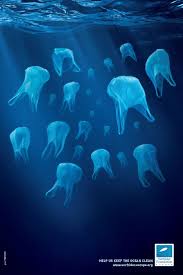
Every second 206 kg of plastic waste end up in the world’s oceans. All of it comes from human activities. Yet marine litter is a hazardous threat not only for the marine environment but generally for ecosystems as a whole. This is why Surfrider Foundation Europe is committed at local, national and European level to fight such scourge.
TAKE ACTION AGAINST MARINE LITTER
WATER QUALITY AND HEALTH
 As the bathing water quality is increasingly under threat, Surfrider Foundation Europe is implementing appropriate action programmes for those who enjoy the coastline and watersports enthusiasts. They can therefore get better informed and not left behind in such matters. For this purpose the organisation is basing its strategy on two key aspects: yearly bathing water quality surveillance and actions for legislation change.
MARITIME TRANSPORT AND INFRASTRUCTURES
 Maritime transport is currently the most ecological means of transport. However the extent of the damage caused by discharges, oil spills or chemical pollutions resulting from an accident shows that it is far from being harmless. Surfrider’s “Maritime Transport & Infrastructures” programme aims at highlighting legislative shortcomings or discrepancies.
PREVENT RISKS DUE TO MARITIME TRANSPORT
ARTIFICIAL COASTAL DEVELOPMENT
 The European coastal environment is victim of its own success. Demographic changes, tourism and leisure development or simply the growing number of residential sectors have largely contributed to excessive artificial coastal changes which are now threatening the coastline. Because coastal ecosystems are now at risk, Surfrider Foundation Europe has developed the “Artificial Coastal Development” programme.
PRESERVE THE COASTAL ENVIRONMENT
CLIMATE CHANGE
 The ocean is the second lung of the Earth. It absorbs 50% of the carbon dioxide released and plays a key role in climate regulation. Unfortunately its regulatory purpose is affected by the greenhouse effect. European Union State members alone are accountable for 10% of the world’s greenhouse gases emissions. With this observation in mind Surfrider raises awareness and educates citizens so that we can individually reduce our carbon footprint.
THE OCEAN AT THE HEART OF CLIMATE CHANGE
 NIRVANA